
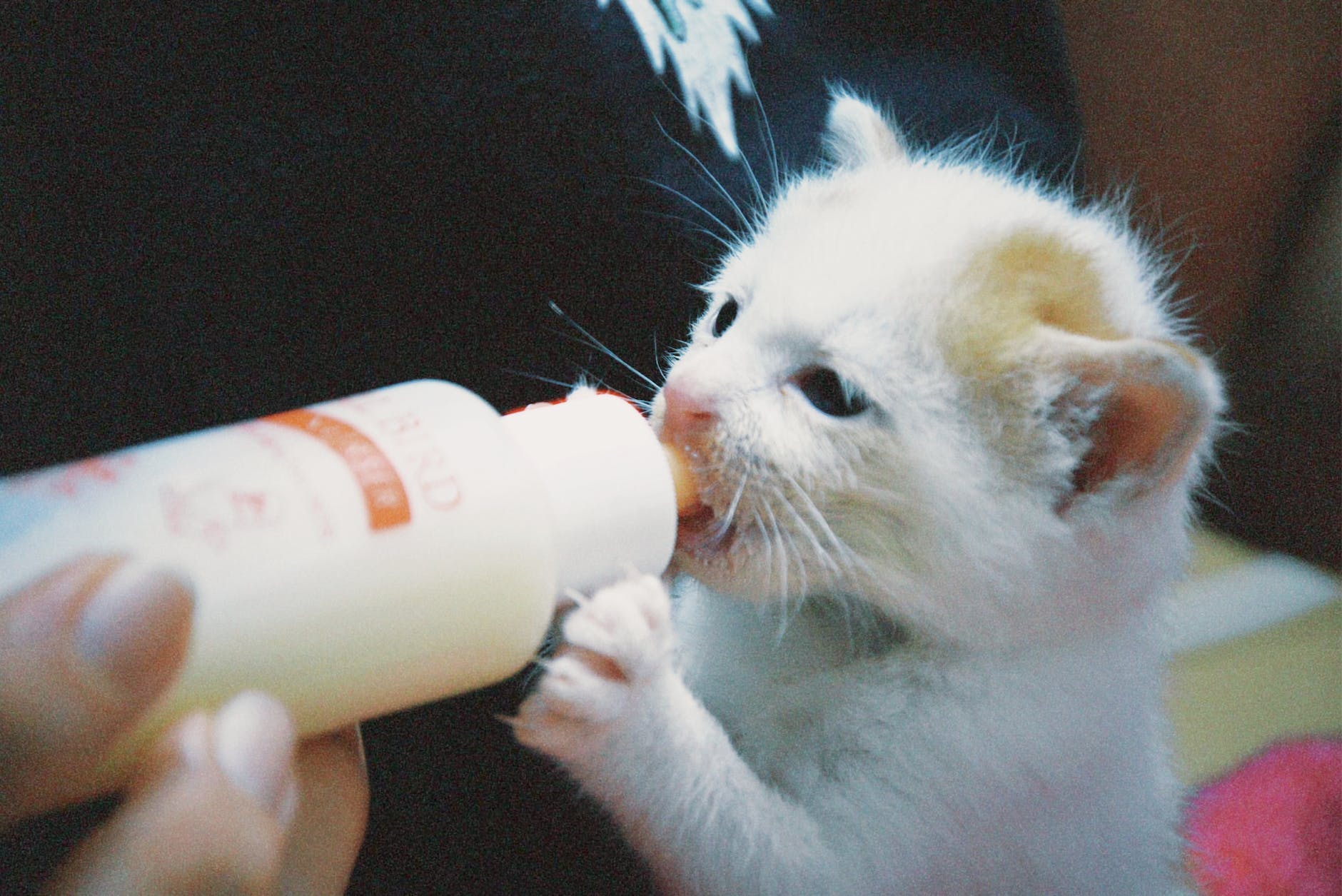
As an experienced kitten fosterer, raising orphaned kittens is a situation I’ve found myself in many times.
In all of these cases, the kittens were found alone, or the mother cat unfortunately passed away. The youngest kitten I raised was just a few days old!
I remember the first time I was presented with an orphaned kitten – I was terrified!
I definitely did NOT feel qualified to take sole responsibility for this tiny and helpless living creature.
But here’s the thing – raising orphaned kittens is not something many people will volunteer to do.
So I knew if I didn’t step up, these kittens would not survive.
If you’ve found an orphaned stray kitten and are wondering how to keep it alive, this guide is for you.
I’m sharing my proven method for raising orphaned kittens and the tips I wish I had known when I first started!
Article content:
(Click any link to jump directly to the section)
“Even the smallest feline is a masterpiece of nature”
Leonardo da Vinci
Raising Orphaned Kittens: First Things First
If you’ve just found an orphaned kitten on the street, you must first understand if the mother cat is around. Check out my guide on finding stray kittens for more advice on this.
Additionally, look around to ensure there are no other kittens from the same litter, as sometimes mother cats move their kittens into different spots.
Once you’ve established the mother cat is gone and there are no other siblings, here’s what to do.
Determining Its Age

Neonatal kittens are those that are less than four weeks old. These first four weeks of a kitten’s life are the most critical, as they are incredibly vulnerable to illness and death.
Kittens less than four weeks of age cannot eat independently.
So, without a mother cat or human caregiver, they will not survive. Therefore, the information in this article focuses on caring for kittens of this age range.
However, the needs of a one-week-old kitten are very different from those of a four-week-old. So, the first step is determining the age of the orphaned kitten you found.
I’ve created a detailed guide on determining a kitten’s age that can help you.
Assessing Its Condition

Along with checking its age, you will need to check its condition.
Here are some signs that the kitten is healthy:
- They cry when you pick them up but quieten down when you put them down – This shows they are responsive but not severely distressed.
- They feel warm to the touch.
- No difficulty breathing (an average respiratory rate for a kitten is 24-42 breaths per minute)
- A soft and squishy belly
- Moist, pink gums
Here are some signs that the kitten is critically sick and needs immediate veterinary care:
- Silent – not crying when you pick them up
- Difficulty breathing or breathing from their mouth – they might do what I call a silent meow (opening their mouth but no sound coming out).
- Hearing a rattly sound when they breathe
- Lethargic and barely moving
- White, dark red, or purple gums
- Feeling extremely cold to the touch
Signs that the kitten has underlying health conditions that you will need to address, but they are NOT at immediate risk of dying are:
- Signs of eye infection – discharge, crusting, swelling, etc
- Sneezing or discharge from the nose
- Poor coat condition, such as patches of fur loss
- A hard, bloated belly
- Brown residue in the ears that looks like coffee granules
- The presence of fleas on their skin
Ensuring It Is Warm

As the stray kitten probably hasn’t eaten in a while, you may be tempted to give it milk before doing anything else.
I DON’T advise this.
Here’s why…
Kittens under about 10 days old cannot regulate their body heat, so staying warm is one of the things they rely on their mothers for.
So, if the kitten has been separated from its mother for some time, it might be cold.
As kittens cannot digest milk or food if their body temperature is too low, it’s essential to warm them up BEFORE offering them food.
And even if you live in a hot country like Thailand, don’t assume they are warm enough. I always use heating pads when caring for neonatal kittens despite the weather always being +30°C.
And if you’re in a cold climate, keeping them warm is even more critical. If a kitten becomes too cold, they may develop hypothermia. This decreases their respiratory rate and blood circulation, leading to fading kitten syndrome and death.
So, if you’ve determined the kitten is under ten days old, here’s what I recommend doing:
- Find a big cardboard box or plastic tub.
- Place a pet heating pad or hot water bottle at the bottom. If you don’t have any of these, you can fill a plastic bottle with hot water instead (just ensure you firmly fasten the lid).
- Cover the heat source with a couple of soft blankets. If using the plastic bottle method, wrap a thick blanket or towel tightly around the bottle.
- Ensure the box is big enough for them to be close to the heat source, but also have the choice to move away should they get too hot.
Bottle Feeding An Orphaned Kitten

Once you’ve completed the above steps, you’ll be ready to give your orphaned kitten its first meal.
However, don’t just grab any old milk from your fridge.
Kittens cannot digest dairy. So if you feed them cow’s milk, they will develop severe diarrhea, leading to dehydration and potentially death.
What To Feed A Newborn Kitten
Ideally, you should feed a newborn kitten with a formula designed for kittens. This is typically a powder you mix with warm water, like KMR. You can buy kitten formula in many vets and pet stores as well as online.
However, if you cannot locate kitten formula straight away, you can feed them goat’s milk until you can get kitten formula.
You’ll also need a small bottle to feed the kitten.
I don’t recommend using a baby bottle because the teat is too big. Instead, get a kitten feeding set, which have a selection of smaller teats as well as different size syringes.
I find feeding via a syringe is often easier with kittens less than a week old. At this age, kittens drink just a few ml per feeding, so feeding with a syringe is a much easier way to track how much they drink.
How To Bottle Feed
Let’s move on to the method of bottle feeding.
Unlike human babies, you should NEVER bottle-feed a newborn kitten on its back.
If you’ve ever seen a kitten nursing on its mother, you may have noticed that they nurse on their bellies. So, recreate this position when feeding them formula.
I like to prop their belly up against a soft teddy or my leg as I feed them so they are at a tilted angle.
I’ve written a whole article on bottle feeding a neonatal kitten with my top tips for getting them to suckle and what to do if they refuse the bottle.
Raising Orphaned Kittens: Feeding Schedule
Newborn kittens must eat every few hours, including overnight. So yes, you have to get up to feed them during the night!
Here is a general guideline detailing how much to feed an orphaned kitten based on age/weight.

Now, you’re probably wondering, when can you stop the night feeds?
Well, it depends on the kitten’s development.
If they are eating well and at a healthy weight with no health concerns, I stop night feeding around 4 – 5 weeks old, which is also when I start introducing solid food.
However, I will continue the night feeds for a while longer if the kitten is:
- Severely underweight
- Has a fluctuating appetite
- Is dealing with any health issue like diarrhea
But of course, there is only so long we can night-feed a kitten before we burn out ourselves.
So, if the kitten is over three weeks old and stable, skipping the feeding for one night is not dangerous.
Also, note that at 0 to 2 weeks old, you’ll need to get up twice a night to feed. But from 2 weeks onwards, you can reduce it to once a night.
So, if you have someone to help you with the nightly feeds in those early days, it will make a HUGE difference!
Stimulating Kittens To Pee & Poop

Finally, one CRUCIAL yet often unknown thing about raising orphaned kittens (less than 3 weeks old) is that they cannot pee and poop on their own.
Yes, this is another job for the mother cat. Naturally, mother cats use their tongue to stimulate the kittens to go potty (in other words, they lick their genitals as they are peeing and pooping!)
Now don’t worry – you don’t have to do it this way!
But you do need to stimulate an orphaned kitten before or after every feeding session. If you don’t do this, they will start refusing their formula and will eventually die – it’s that serious.
How To Stimulate An Orphaned Kitten
To help them pee, use a soft tissue and gently rub it in a circular motion over their genitals.
Kittens typically begin to pee immediately, but it can take up to 30 seconds to get them going. Continue stimulating until their bladder is empty.
While kittens should pee at every feeding, they will poop less frequently – typically 1 to 3 times a day.
To help them poop, use the same method on their anus. You will feel if they need to go because, after 10 to 20 seconds, they will start pushing. Continue stimulating while they push and until all the stool is out.
Final Thoughts On Raising Orphaned Kittens
Raising orphaned kittens is hugely challenging but incredibly rewarding. It requires a lot of time, energy, and patience.
But thankfully, unlike human babies, kittens develop quickly, and by 5 – 6 weeks old, they are already becoming independent little felines.
So, if you come across a newborn kitten on the street without its mama, know that by taking it in and raising it, you are literally saving a life!
And you don’t have to do it alone. I’ve created a FREE resource to walk you through how to care for a newborn kitten from 0 to 8 weeks old and beyond.
The Beginner’s Handbook to Fostering Kittens is filled with week-by-week support, real-life advice, and pro tips to help you raise healthy, thriving kittens.
Download it here:
For more tips on orphaned kitten care, check out this guide where I share my proven techniques for ensuring these vulnerable felines thrive!
Leave a Reply