
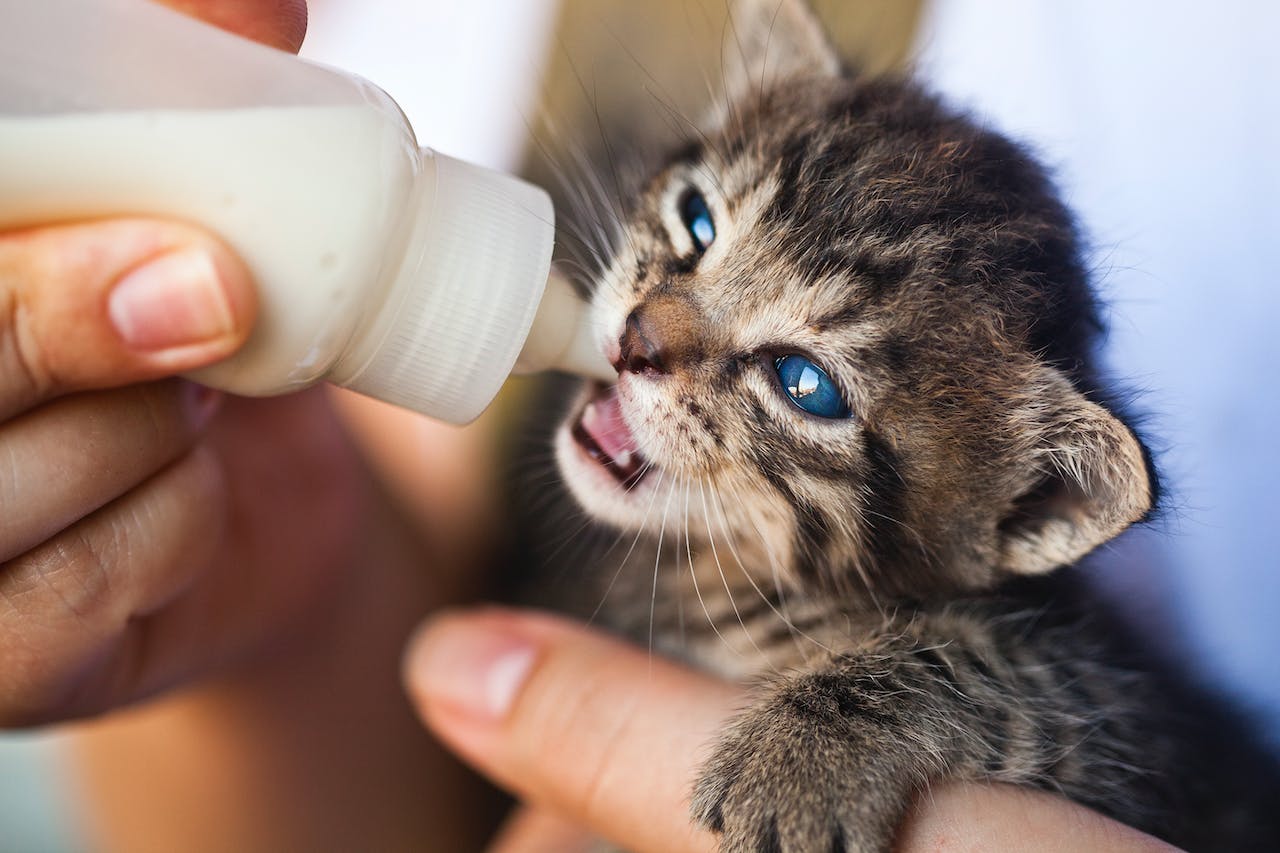
Bottle-feeding kittens for the first time can be a pretty scary experience.
Neonatal kittens are very fragile, so it’s natural to worry that you might harm them rather than help them.
However, if a kitten is without a mother (abandoned, orphaned, etc) or the mother cat is sick and unable to nurse, the kitten will only survive by bottle feeding.
In this guide, I explain the right (and wrong) way to bottle feed a kitten, what you will need, and tips on dealing with tricky bottle babies who won’t latch.
And for advice beyond the bottle (like toileting your kitten before and after meals) download my free resource – The Beginner’s Handbook to Fostering Kittens.
Article content:
(Click any link to jump directly to the section)
Bottle-Feeding Kittens Preparation
Before we dive into the best (and worst) methods of bottle-feeding kittens, let’s discuss the preparation.
Giving a kitten the wrong formula can be just as dangerous as incorrectly feeding them.
Plus, if you choose the wrong-sized bottle and nipple, the kitten will struggle to latch and, thus, won’t get sufficient nutrition.
Get The Right Bottle
When I raised my first orphaned kitten, I had no idea that specific kitten bottles existed. So, instead, I opted for a baby bottle.
While baby bottles are widely available, I don’t recommend using one when feeding a neonatal kitten. This is because the nipple is far too big for their tiny mouth.
Many vets and pet stores sell kitten or puppy bottles with much smaller nipples, which more closely resemble the nipples of a mother cat. I’ve found it much easier to get a kitten to latch with these bottles.
There are also many options on Amazon. I particularly like this kitten nursing set, which contains a nursing bottle and a various syringes.

A kitten nursing kit will serve you from birth all the way to weaning. Start with the syringes—I often find it easier to use syringes with tiny kittens as you can better monitor how many ml they are consuming.
Once they get bigger and their appetite increases, switch to the bottle. Be sure to follow the kitten feeding guide at the end of this article!
Additional tip:
Sometimes, the nipple of the bottle will be uncut, so you will have to cut it yourself. Be careful not to cut a hole too big, as this will cause the kitten to ingest the formula too quickly.
When you tip the bottle upside down, the formula should drip out slowly rather than in a continuous flow.
Use Kitten-Specific Formula

You should NEVER feed a kitten cow’s milk as they cannot properly digest it.
A kitten’s digestive system does not have the proper enzymes to break down the sugars in cows’ milk. Thus, feeding a kitten cow’s milk can cause severe diarrhea, which can lead to dehydration and even death.
Instead, you should use a kitten-specific formula (KMR is my favorite), which is designed for baby cats. You can find this in many pet stores, at the vets, or on Amazon.
If you cannot find kitten formula, you can give a kitten goat’s milk, which is more digestible for them than cow’s milk.
However, I don’t recommend feeding a kitten goat’s milk long-term as it does not contain the proper nutrients. Kitten formula has added vitamins to meet a kitten’s nutritional needs.
Preparing The Formula
Kitten formula typically comes in a powder format, which you combine with warm water. Each formula has a different ratio of water to powder, so read the instructions thoroughly beforehand.
When introducing an orphaned kitten to formula for the first time or switching from a different brand, I recommend you prepare a diluted mixture for the first few feedings.
If there are no issues, such as diarrhea, gradually increase the powder amount until you feed the recommended ratio.
If a kitten seems particularly hungry, consider adjusting the ratio, adding a little more powder and a little less water. Still, any changes you make should be subtle and gradual to avoid upsetting the kitten’s sensitive stomach.
Heating The Formula
It’s best to add the powder to warm water rather than add it to cold water and then heat it up. This will prevent overheating the formula and losing the nutrients.
Warming the water in a microwave is the easiest method. Still, getting the water to a lukewarm temperature will likely take a few tries.
What’s more, warming water in the microwave tends to heat it inconsistently, so you’ll need to shake the bottle before testing the temperature.
Test the temperature by placing a few drops on your wrist. It should feel lukewarm, not hot.
If you are using goat’s milk or a ready-made liquid formula, you can warm it in one of the following ways:
- In the microwave – as described above (be careful not to overheat it)
- Placing the bottle in a mug or bowl of boiling water (this method typically warms the formula in a more even way)
How NOT To Bottle Feed A Kitten
Many people assume the best method for bottle-feeding kittens is on their back, like a human baby. However, you should NEVER bottle-feed a kitten in this way.
With this method, there is a severe danger of causing the kitten to aspirate, which is when they inhale formula into their lungs. This causes breathing difficulty, which often becomes life-threatening.
Best Method For Bottle-Feeding Kittens

So, if you shouldn’t put them on their back, how do you bottle feed a kitten?
Try to recreate the natural feeding position of a kitten and mother cat as closely as possible.
When nursing from their mothers, kittens lay on their bellies, prompt up slightly on the mother cat’s body.
Therefore, I bottle-feed kittens on their bellies.
Here’s how to do it:
- Prop them up on a soft teddy or your leg.
- Use one hand to keep their head still as you hold the bottle in the other hand.
- Gently slide the nipple into the kitten’s mouth and tilt the bottle slightly to get the milk flowing into their mouth.
Ideally, the kitten should latch onto the bottle by rolling its tongue around the nipple. As the kitten suckles, you will see them swallowing and notice their ears twitching as they do so.
NEVER squeeze the bottle, as this can cause aspiration.
If they do not latch, check that the formula is not blocked and unable to flow freely out of the bottle. This may happen if the hole is too small or there are clumps in the formula.
If there are no issues with formula flow, try the following methods…
What To Do If The Kitten Doesn’t Latch
Drinking from a bottle doesn’t feel natural to a kitten, so it’s likely that your kitten won’t latch straight away.
However, if they’re still having trouble after several attempts, you can try a different approach…
Burrito Wrapping Kittens

Sometimes, kittens won’t latch because they are too angsty. They might fight the bottle, kicking their legs and trying to wriggle out of your grip.
For these kittens, making them feel safe and comforted is essential. My favorite way to do this is to ‘burrito wrap’ them in a soft blanket or towel.
To do this, pick up the kitten and wrap a towel around their body, leaving just their head out. With their arms and legs inside, they can no longer kick.
Then, as you offer the bottle, lightly stroke their head. This can help them feel comforted in the same way as their mother licking them.
Stroking them with an old toothbrush is even better, as it replicates the texture of the mother cat’s tongue.
Syringe Feeding Kittens
If your kitten still doesn’t latch, switch to the syringe feeding method.
You can manually press the formula into the kitten’s mouth with a syringe.
However…
Do this VERY slowly. Start with a few drops, let them swallow, then give a few more drops.
Syringe feeding is typically slower than bottle feeding, so patience is definitely required!
When syringe feeding, put the syringe in the side of the mouth, not the front. If the kitten’s teeth are already coming through, slide the applicator between the canine and the back teeth – you will see a natural gap here.
How Often Should You Bottle Feed A Kitten?
How much you should feed a kitten and how often will depend on its age. To correctly determine a kitten’s age, refer to my comprehensive guide on kitten age.
The following chart shows the recommended amount of formula to bottle feed a kitten based on age/weight and how often to bottle feed them.

Final Thoughts On Bottle-Feeding Kittens
Bottle feeding is just one aspect of raising an orphaned kitten. Download the FREE Beginner’s Handbook to Fostering Kittens to learn what else to do to keep a baby cat alive and well during its first two months of life.
Leave a Reply