
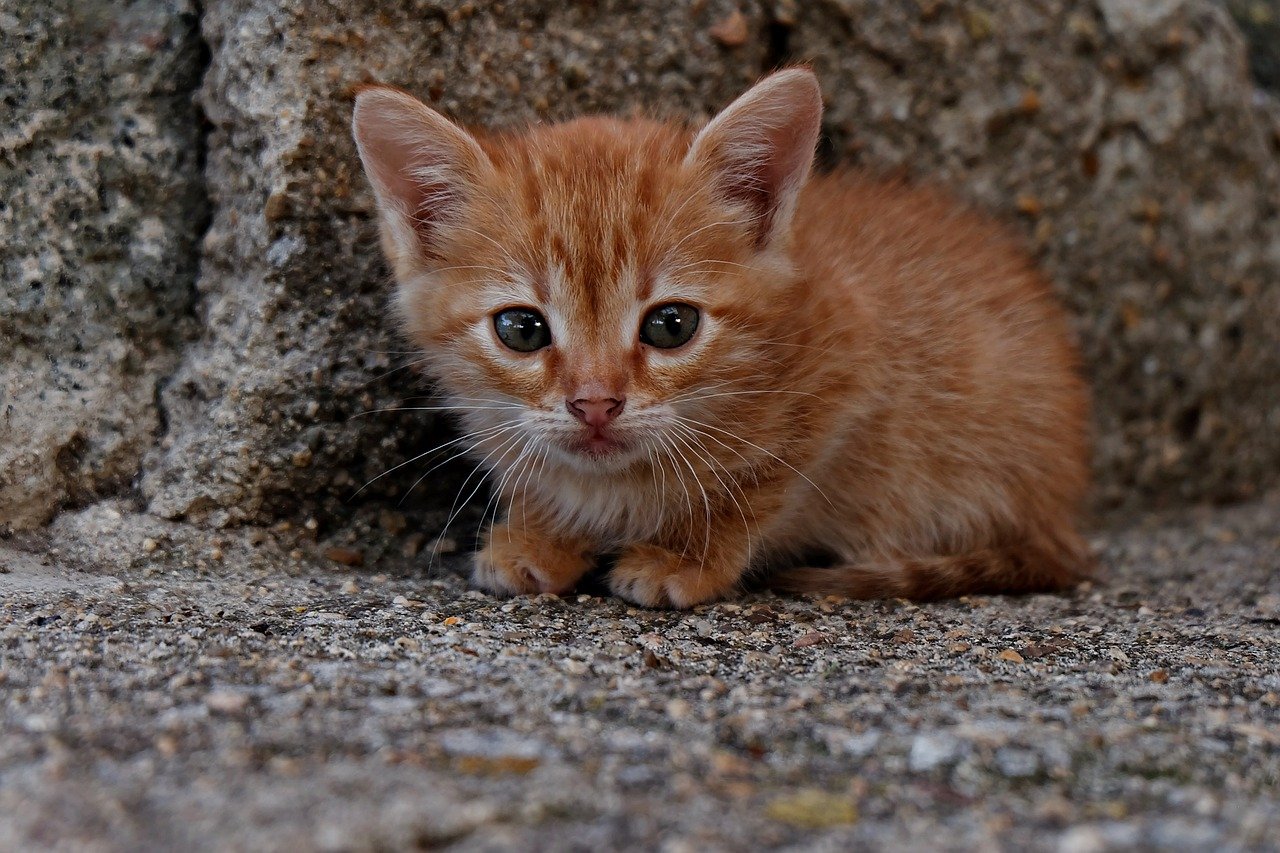
Are you traveling in Thailand and have come across a baby kitten?
Thailand is full of stray cats and kittens, so as a cat lover, it’s natural to want to help them. However, there are certain things you should consider before you take a baby kitten off the street.
To determine the best way to help a stray kitten in Thailand, scroll through this checklist…
Article content:
(Click any link to jump directly to the section)
Step 1: Check It’s Condition
If the kitten is visibly dying or severely injured, getting it to a vet ASAP may be the only way to save it.
Signs a stray kitten needs immediate veterinary care include if it is:
- Lifeless / almost no movement
- Struggling to breathe
- Cold to the touch
- A severe eye infection, such as excessive crusting preventing the eyes from opening, clouded pupils, or a bulging eye (like the eye is going to pop out of the socket)
- Limping and crying out in pain
- Severely bleeding

A quick Google search will help you find the nearest vet or animal hospital.
Just ensure you transport the kitten safely, especially if driving a scooter. I recommend to buy a cheap plastic basket from the nearest homeware store.
For an idea of how much vets in Thailand cost, check on my article on Thailand vet prices.
If the kitten seems healthy or just slightly sick, move on to step 2…
Step 2: Determine The Kitten’s Age
Understanding the stray kitten’s age is essential in knowing whether it can survive on its own or not.
Kittens under 4-5 weeks old rely solely on their mother and the milk she provides. At this age, they cannot yet eat solid food and certainly cannot hunt for food themselves.
Kittens 5 weeks and above are in the weaning period, where they transition from their mother’s milk to solid food.
However, many kittens cannot eat dry cat food immediately. They also cannot hunt for food until they are about eight weeks old.
How To Determine The Age Of A Kitten In Thailand

- Newborn (less than 1 week old) – Their umbilical cord will still be attached, their eyes closed, and their ears folded down. A wet umbilical cord indicates that they were born very recently, while a dried cord signifies that they are at least a few days old.
- 1 week old – By one week old, the umbilical cord will have fallen off. A kitten’s eyes start to open between 8 and 12 days, usually over a few days.
- 2 weeks old – A kitten’s eyes will be fully open by two weeks old. They will also start moving around more, although they will still be very wobbly.
- 3 weeks old – A kitten’s ears will be unfolded and open at three weeks. Their very first teeth (the incisors) will also start to emerge.
- 4 weeks old – You will see more teeth (the canines) emerging at four weeks. They will also appear less wobbly on their feet.
- 5 – 7 weeks old – Kittens between five and seven weeks will be running around, playing, and showing interest in food. Their eyes will still be blue at this stage.
- 8+ weeks old – A kitten that is eight weeks or older will be able to eat fully independently. Their eyes will no longer be bright blue but will be transitioning to their permanent color.
For a more detailed explanation of each kitten age, see my comprehensive guide on determining a kitten’s age.
When determining the age of a stray kitten in Thailand, be careful not to handle them too much. Doing so could change their smell, which might confuse the mother cat, potentially causing her to reject them.
Step 3: Wait To See If The Mother Cat Returns
Only take a healthy stray kitten younger than six weeks old if you’re sure the mother cat is no longer around (or if you see the mother cat rejecting it).
As someone who has fostered many orphaned newborn kittens, I can tell you they do much better when their mother raises them.
What’s more, hand-rearing newborn kittens is a very time-consuming and tiring job. So, it is not something you will want to do unless you really have to.
Stray mother cats don’t always stay with their babies as they have to go out to hunt food. Thus, you might have stumbled across the kitten while the mama cat is away.
So leave them be (don’t move them) and return a few hours later. If the mother cat is still not there when you return, reassess the kittens.
If they are sleeping peacefully or in a different spot, this suggests the mother cat came back to care for them while you are away.
However, if the kittens seem distressed and are crying out, it is more likely that the mother cat did not return.
If The Mother Cat Comes Back

If you see the mother cat come back, leave the kitten. There are only three exceptions when you should take a kitten away from its mother if:
- Either the kitten or mama cat is severely sick or injured
- The mama cat has rejected the kitten and is not nursing it
- The kitten is older than six weeks old and you want to find it a home
Otherwise, leave some food and water out. You can also set up a dry and safe spot for them, but don’t move them there; let the mother cat decide.
I highly suggest keeping an eye on both the mother cat and kittens over the next few weeks (or as long as you can). Nursing cats have a ravenous appetite, so supplying good quality wet food will help her stay strong and healthy (and thus, keep her kittens healthy).
If you’re staying in Thailand for a while, you can go a step further.
Once the kittens are no longer nursing and can eat solid food, arrange sterilization for the mama cat ASAP. Most vets are happy to sterilize stray cats and will explain the process to you.
I cannot emphasize how much of a positive impact you can make by spaying the mother cat. Female cats can get pregnant again super quickly, so sterilizing her as soon as she stops nursing will help to slow the reproduction rate of stray cats in Thailand.
Should You Take In Both The Kitten And Mother?
If the kitten is sick and you want to take it to a vet, bringing the mother along also is a good idea (or vice versa).
However, there is one thing you need to ensure before you do so – that she doesn’t have any other kittens.
Taking the mother cat away when it has other kittens hiding somewhere else can put the lives of those kittens at risk.
Another reason you may want to take both mum and kitten is if you can foster them, offering them a safer place than on the street. While this is a lovely thing to do, again, be sure she has no other kittens.
In this situation, I recommend leaving them for the time being but going to check on them regularly, as this will help you better determine if there are other kittens.
If The Mother Cat Doesn’t Come Back

If the mother doesn’t return, your course of action will depend on the kitten’s age.
A healthy kitten that is older than 6 weeks has a chance of surviving on the street, so it is not essential that you take it in.
But if the kitten appears under 6 weeks of age, you will need to do one of the following to ensure it survives.
- Take the kitten in yourself – If you do this, read my Raising Orphaned Kittens guide for further tips and advice.
- Find someone else to take the kitten – Search and contact local shelters or post in local community Facebook groups. Many places in Thailand have dedicated groups for animal lovers, but a general one you can post in is ‘Pets In Thailand.’
If you are only in Thailand for a short time and know you can’t keep the kitten yourself, don’t let this deter you from helping temporarily.
Young kittens are easy to get adopted, and finding a loving home for a little helpless kitten is one of the most rewarding feelings ever!
Be proactive, ask around, and post in community groups to try to find a loving home for the little one!
Final Thoughts On Finding A Stray Kitten In Thailand
Helping a stray kitten in Thailand in need is a wonderful thing to do.
However, never take a newborn kitten away from its mother. Most stray mama cats do an excellent job raising their kittens on the street, so don’t assume it needs your help.
The best-case scenario is to leave a kitten with its mother. However, if the kitten is severely sick, or if the mother cat does not return after several hours, stepping in could save this little kitty’s life!
Leave a Reply