
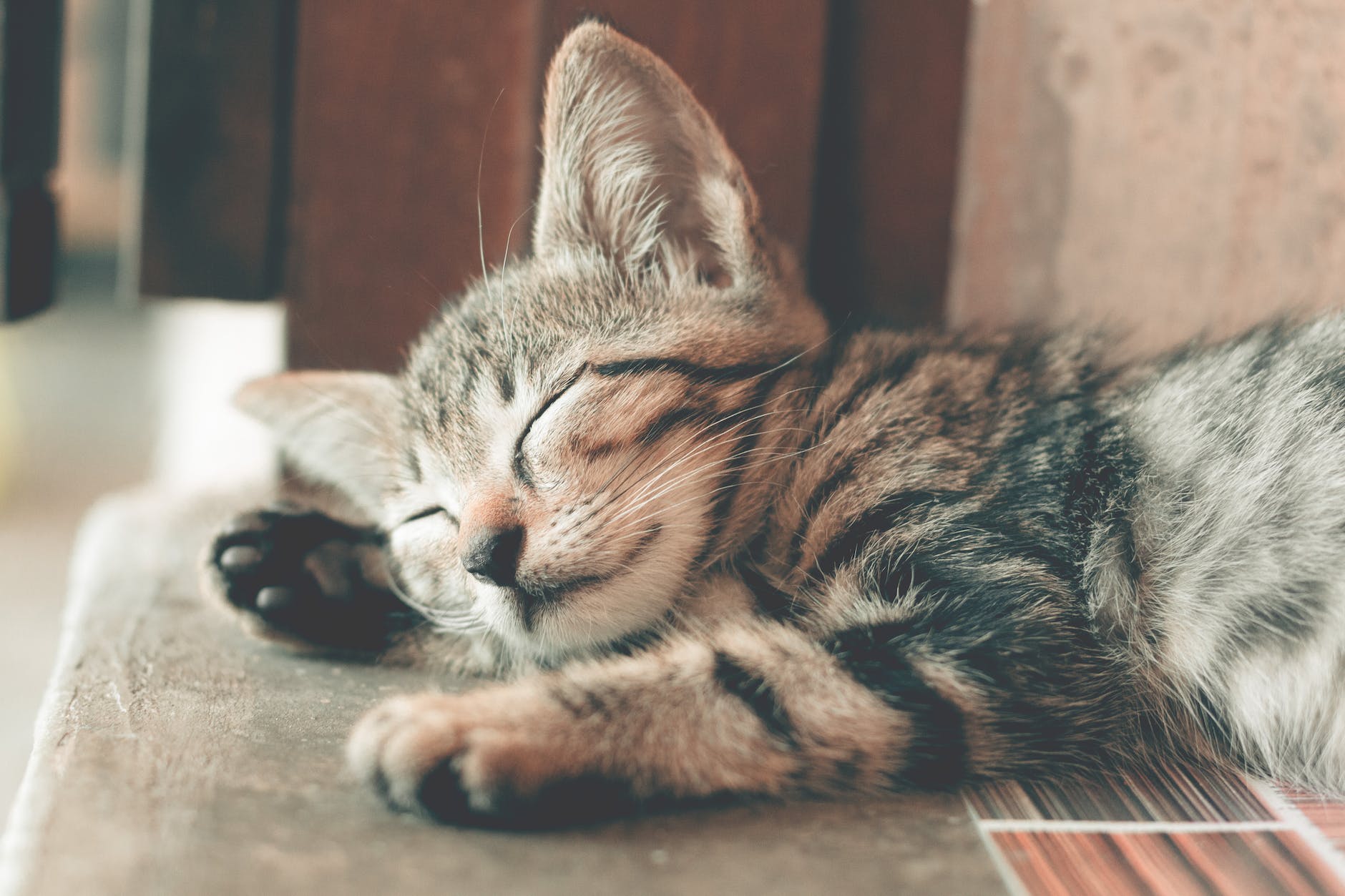
Any cat lover who encounters a tiny kitten alone on the street will feel an intuitive desire to care for it. However, orphaned kitten care requires a specific set of skills.
The good news is anyone can learn these skills.
I fully believe that in the right hands, orphaned kittens can thrive, not just survive.
But here’s the bad news – It’s not easy!
Raising orphaned kittens calls for an exceptional amount of time, energy, and love – just like raising a human baby.
So, if you’re serious about giving a vulnerable feline the best start in life, read on. I’m sharing my tried and tested orphaned kitten care tips and tricks.
Article content:
(Click any link to jump directly to the section)
Can Orphaned Kittens Survive Without Their Mother?
Like human babies, kittens rely on their mothers to meet all their basic needs. So, should the mother cat die or abandon them, they will NOT survive alone in the wild.
However…
Orphaned kittens CAN survive without their mother IF they receive round-the-clock care from a human.
But here’s the thing…
Caring for an orphaned neonatal kitten (under 5 weeks old) is nothing like caring for a 3-month-old kitten.
You cannot just give them a bowl of food twice a day and expect them to be ok.
No, caring for young orphaned kittens is extremely difficult.
Newborn kittens need to be:
- Bottle fed every 2 hours, including at night
- Stimulated to pee and poop
- Kept warm at all times
And that’s just to meet their core physical needs!
I also want to stress that a mother cat’s milk contains essential nutrients that a kitten needs to develop and grow at a healthy rate.
While there are kitten milk replacement formulas, none match the quality of the mother’s milk.
This, combined with the stress of being alone, significantly increases the chance of the kitten getting sick and dying.
Survival Rate Of Orphaned Kittens

Veterinary literature reports the mortality rate of orphaned kittens under 12 weeks of age is 15% to 40%.
However, this is a general overall statistic, so it does not mean that if you rescue an orphaned kitten, it only has a 15% to 40% chance of surviving.
In fact, determining the chance of survival on a specific kitten is impossible.
In my years of caring for orphaned kittens, I’ve had ones that look and seem fully healthy but then suddenly crash and pass away within minutes, which is known as fading kitten syndrome.
Other times, I’ve rescued severely sick kittens that made a miraculous recovery.
Expertise and experience in caring for neonatal kittens can sometimes save them.
But it’s important to remember that sometimes there is nothing anyone can do. For example, many kittens are born with defects, or they contract fatal viruses from their mother.
Orphaned Kitten Care 101
Firstly, ensure you are aware of an orphaned kitten’s basic needs:
- Drinking kitten-specific formula every 2-3 hours, depending on age/weight.
- Being stimulated to pee and poop after each feeding (if under 3 weeks old)
- Having a heat source (like this pet heating pad) to keep them warm – Kittens under about 10 days old cannot regulate their body heat.
Learn more about the critical aspects of orphaned kitten care with my FREE resource – The Beginner’s Handbook to Fostering Kittens. Inside, I share the exact steps I follow to raise healthy orphaned kittens, from 0 to 8+ weeks old.
The Importance Of Weight Gain In Orphaned Kittens

Deaths of neonatal kittens are rarely investigated, but it is believed low birth weight and poor growth rates are among the common causes of death.
This is why my main focus when caring for orphaned kittens is to ensure they keep gaining weight.
This means you should be weighing kittens under 4 weeks old daily.
The Kitten Lady, founder of the nonprofit Orphan Kitten Club, says that if a kitten is losing weight or not gaining, this is often a sign that something is seriously wrong.
And from my experience, I agree.
While it may be fine for a kitten not to gain weight for a few days, the longer they go without gaining weight, the sicker they become.
So, figuring out the problem and getting the kitten to gain weight ASAP is imperative.
Tips For Weight Gain
So what do you do if a kitten refuses to eat/drink or is not gaining weight despite having a good appetite?
Follow The Correct Feeding Schedule
Firstly, ensure you are feeding the kitten the right quantity of formula and at the correct frequency.
To understand this, you’ll need to know the kitten’s exact age and weight – my determining kitten age guide can help you do this.
That being said, orphaned kittens are often underweight. So, to give them the best chance of survival, I suggest feeding them based on their weight, as shown in the table below.
For example, if you have a 3-week-old kitten that weighs 200g, follow the feeding schedule of a 1-2 week old.

Check Their Gut Health
If you’re feeding the kitten in the way explained above and they’re still not gaining weight, take them to a vet for a fecal test.
Most stray kittens have worms, which can prevent them from gaining weight, no matter how much formula they drink.
This is a high-caloric gel that contains vitamins and minerals to help a kitten recover from sickness and also helps to stimulate appetite.
If intestinal parasites are not the issue, the kitten could have a bacterial infection in the gut, causing diarrhea and preventing weight gain.
Kittens’ stomachs are incredibly vulnerable. During the neonatal stage, their bodies cannot fight off bacteria. So, if ANY bacteria gets into their system, they will develop an infection.
Infections are highly dangerous in neonatal kittens as they do not have the immune defenses to fight them off. They can also cause severe diarrhea and sickness.
So, if not treated ASAP by a veterinarian, they will become dehydrated and die.
Along with getting them the medication they need, you can do a couple of things to improve their gut health.
If any kitten I’m caring for has gut issues (diarrhea, constipation, etc), I add two things to their formula to get them thriving:
- Probiotics – I use Purina Pro Plan FortiFlora.
- Electrolytes – I use Breeder’s Edge Kitten Lyte.
Stimulate Their Appetite (If Needed)
If you have a kitten with a poor appetite but free from parasites/infections, you can try these things to stimulate their appetite.
- Switch To A Different Formula
- Use A Different Bottle
- Try Syringe Feeding
- Give An Appetite Stimulant
1. Switch To A Different Formula
It could be that the kitten does not find the particular formula appeasing or satisfying.
If you suspect this, do a gradual switch to avoid GI upset. Start by mixing both formulas and then gradually decreasing the ratio of the old one.
2. Use A Different Bottle
If the kitten is not latching onto the bottle, try a new one with a different-shaped nipple. I recommend getting a kitten feeding set as they have a range of small and soft bottle nipples designed for kittens.
You can find more bottle-feeding kitten tips here if you’ve got a tricky bottle baby.
3. Try Syringe Feeding
Some kittens who struggle to latch will take better to syringe feeding. A syringe is also a good way to get a few extra ml into the kitten if their appetite is poor.
But be extremely careful when syringe feeding a kitten to ensure the formula does not come out too fast and cause aspiration.
4. Give An Appetite Stimulant
If the kitten is of weaning age (4 weeks and older), you can give them a high-energy dietary supplement. The Under the Weather high-calorie nutritional gel also has added vitamins, minerals, and omega fatty acids.
Consider Early Weaning

I once had an orphaned kitten that I raised from one week old.
He was always a problematic bottle baby – sometimes he would latch, but other times he wouldn’t.
I dewormed him, checked for infections, and tried all of the above, and he still was not gaining weight.
At 3.5 weeks old, I decided to slowly wean him onto wet food, even though it was a bit early.
Immediately, his appetite increased, and he started gaining weight (after 1+ weeks of no weight gain).
This was when I realized that every orphaned kitten has different needs.
Some kittens struggle to get the nutrients they need from kitten formula no matter what you do. In these cases, they either reject the bottle yet seem hungry or have consistent diarrhea or constipation (but are free from parasites and infections).
So, in these situations, I’ve found it’s best to start weaning them once they reach 3.5 weeks old – as long as their teeth are coming through.
Wet kitten food is much higher in calories and nutrients than any formula, so they typically start gaining weight rapidly.
Of course, this is NOT a solution for a kitten less than three weeks old, as their bodies cannot yet digest food.
Orphaned Kitten Care: Meeting Their Emotional Needs
A huge part of orphaned kitten care is meeting their emotional needs.
There is a lot of research on the adverse effects of human infants who receive insufficient touch.
Firstly, researchers have found that lack of touch can hinder a baby’s physical growth as touch stimulation releases important growth hormones.
It also has a significant impact on their emotional development.
When infants receive touch from their caregivers, their parasympathetic nervous system gets activated, producing feelings of reassurance, safety, comfort, and love.
Although this research is based on human babies, kittens seek comfort from their mothers in the same way.
So, if you care for an orphan kitten, you must try to meet their emotional needs yourself.
If you have 2 or more orphan kittens, they can comfort each other to some degree. But if you are caring for a solo kitten, you’ll need to spend considerable time with them.
Many kitten experts recommend gently brushing them with a wet toothbrush as this replicates the feeling of being groomed by their mother.
However, I find the best way to comfort a kitten is to hold them against your chest. Doing this makes them feel warmth and hear your heartbeat – two things they find comforting from their mother.
When I can’t be with them, I create a cozy space for them with soft blankets and a soft teddy for them to suckle on. I chose one that is a similar size to an adult cat. Just ensure there are no loose buttons or decorations the kitten could ingest.
FAQs On Orphaned Kitten Care

Can Another Mother Cat Nurse An Orphaned Kitten?
Yes, if you can find a lactating female cat, it is well worth introducing the orphan kitten to see if she will accept and nurse it. This is typically a better solution than raising the kitten yourself.
Do Orphan Kittens Make Good Pets?
Absolutely! Orphaned kittens are just as loving as kittens raised by a mama cat. In fact, they will often be even more affectionate as they have a higher level of trust towards humans.
However, orphaned kittens can display inappropriate behaviors later in life, such as suckling, kneading, and biting. This is more likely in orphaned kittens raised without any siblings.
Are Orphaned Kittens More Affectionate?
Kittens raised by a human from an early age are often more affectionate and trusting around humans. An orphan kitten will develop a particularly deep bond with the person who bottle-fed them, often viewing them as its mother.
Further Resources
For more support on caring for orphaned kittens check out The Kitten Foster Blueprint eBook (also available in paperback).
It’s packed with real-life experience, step-by-step care instructions, emotional support tools, and printable checklists to help you raise healthy kittens without the overwhelm.

Leave a Reply