
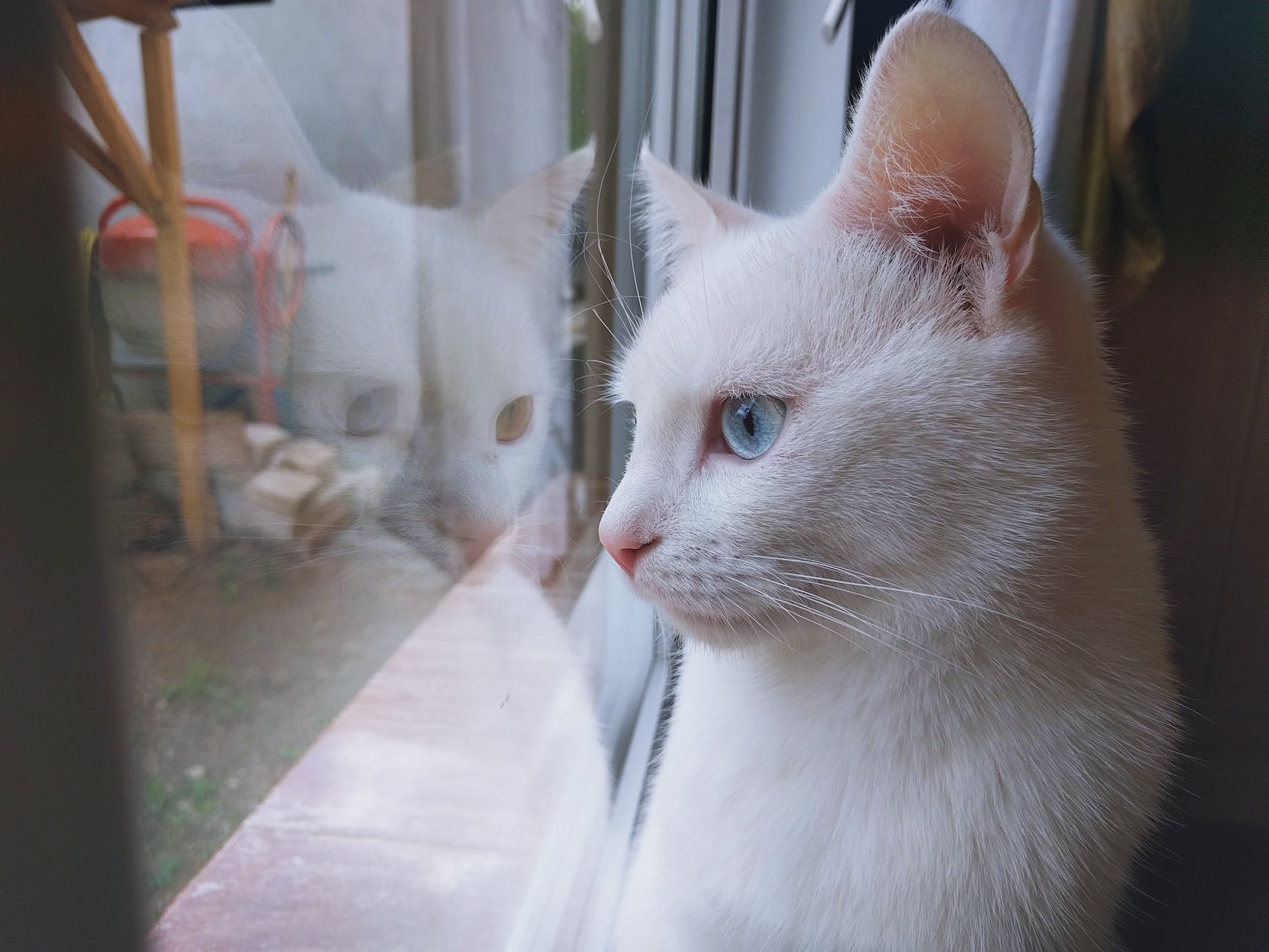
In many parts of the world, it’s the norm to keep cats inside. But life for cats in Thailand is very different.
The culture and way of life mean most Thai cats live outdoors or are indoor/outdoor cats.
But with dogs roaming the streets, ever-increasing traffic, and a tropical environment rife with bacteria and viruses, is it best to keep your cat indoors in Thailand?
The answer is not black and white; I believe it depends on the cat.
Whether you’ve adopted a Thai cat or have brought your pet cat with you to Thailand, read on.
I’m discussing both sides of the indoor vs outdoor cat debate to help you decide what’s best for your furry friend.
Article content:
(Click any link to jump directly to the section)
- Is Thailand Safe For Cats?
- Should You Let Your Cat Outside In Thailand?
- Indoor Vs. Outdoor Cat Lifespan
- Indoor Vs Outdoor Cat: Determining What’s Best
- Can An Outdoor Cat Become Indoor?
- Transitioning An Outdoor Cat To Indoor Life
- Transitioning A Stray Kitten To Indoor Life
- Are Indoor Cats Happy?
- Conclusion: Should You Keep Cats Inside In Thailand?
Is Thailand Safe For Cats?
Street cats are not entirely safe anywhere in the world, and Thailand is no exception.
However, the dangers for cats in Thailand differ from those in Western countries.
For example, you might not have to worry about coyotes attacking your cat here, but things like snakes and street dogs pose a threat.
The truth is, wherever you live in Thailand, there will be potential dangers for your cat. If you live in a big city or near a busy road, your cat could get hit by a car or motorbike.
But if you live in the jungle or on a small island, there will be more venomous snakes and monitor lizards around.
Should You Let Your Cat Outside In Thailand?

Considering the dangers for cats in Thailand, is it better to keep cats inside?
While the most logical answer is yes, it may not always be the case.
This is because some cats take to indoor life better than others.
For example, an adult cat that has lived on the streets its entire life sees the outdoors as its home.
So, if you suddenly try to keep that cat indoors, it could become highly stressed, feeling trapped and confined.
Before we discuss how to determine what’s best for your unique cat, let’s look at the pros and cons of an indoor vs outdoor cat…
Indoor Cat Pros & Cons
Pros:
- Indoor cats typically live longer.
- You get to spend more time with them.
- They are less likely to contract parasites or diseases.
- They won’t get in fights with stray cats.
- You have more housing options – i.e., you can live in an apartment.
Cons:
- They are not able to fulfill their hunting instinct.
- They might get bored quickly.
- There is more chance that they will scratch your furniture.
- They can be more needy.
- They are more prone to obesity.
Outdoor Cat Pros & Cons
Pros:
- Outdoor cats are more active and have a healthy weight.
- They might seem happier as they have plenty of stimulation.
- They will have a sense of freedom.
- Outdoor cats are more independent and less needy.
Cons:
- They will likely get in fights with stray cats.
- Outdoor cats are more at risk of catching diseases and viruses.
- The risk of traumatic injury (and death) is higher.
- You might not see them much (some outdoor cats only come back to eat).
- They can play a role in endangering the native wildlife.
Indoor Vs. Outdoor Cat Lifespan

According to US-based research, there is a vast difference in lifespan between indoor and outdoor cats.
For example, researchers at the University of California-Davis claim that indoor cats live on average 15-17 years while outdoor cats typically live for only 2-5 years.
However, it’s important to note that this is based on cats in the USA, where the environment, climate, and predatory wildlife differ significantly from Thailand.
Indoor cats do indeed tend to live longer as there are essentially fewer things that can kill them.
But that doesn’t mean they won’t survive long if you let your cat outside.
It really depends. I’ve known outdoor cats in Thailand that have lived to a very old age, and I’ve also known many that die before their first birthday.
Indoor Vs Outdoor Cat: Determining What’s Best
There are a few scenarios when it makes absolute sense to keep cats inside in Thailand.
For example:
- If you’ve brought your cat over from your home country where they always stayed indoors.
- If your cat has special needs, i.e., it’s deaf, a tripod cat, or has an ongoing medical condition that must be closely monitored and managed.
However, if you’ve rescued a Thai cat from the street, the answer is not clear-cut.
I’ve found that the ability to adapt to life indoors differs significantly among Thai cats, depending on their age, personality, and genetics.
Can An Outdoor Cat Become Indoor?

It definitely is possible for an outdoor cat to become an indoor-only cat. But it depends entirely on the cat.
Let’s take two examples:
- The cat’s mother was an abandoned pet cat.
- The cat’s mother was feral.
As you can guess, the cat born from a socialized cat is more likely to be happy as an indoor cat.
Of course, if you adopt or rescue a street cat in Thailand, you likely won’t know their ancestry.
So, I recommend keeping the cat indoors initially to see how it goes. After a while, you’ll notice one of the following:
- They adapt and settle to indoor life quickly.
- It takes them a while, but after an ample adjustment period, they appear happy to stay indoors.
- After several months, they are still showing signs of stress or depression from being indoors.
Transitioning An Outdoor Cat To Indoor Life

There are certain things you can do to try to transition a stray Thai cat into an indoor cat, such as:
- “Catify” your home as much as possible with plenty of enrichment items (think cat trees by windows, scratch posts in every room, plenty of toys, etc).
- Use cat-calming diffusers and sprays, such as Feliway.
- Try harness training them and taking them for walks on a leash.
If your cat is still unhappy to stay inside after trying all these things, you should consider what is best for the cat.
Yes, indoor cats live significantly longer than outdoor cats.
But in my opinion, if a cat is miserable being indoors, letting them be an indoor/outdoor cat is the best option.
Yes, we want our pets to have long and healthy lives, but we also want them to be happy.
If your cat seems happiest when they have the freedom to roam outside, then allowing them to do so will give them the most fulfilling life.
Transitioning A Stray Kitten To Indoor Life

Kittens are much more adaptable than adult cats. So, if you adopt or rescue a kitten in Thailand, there is a higher chance that they will adapt well to live indoors.
However, if you plan to keep your adopted kitten indoors, avoid making the same mistake as me…
When kittens and young cats experience the sense of freedom of being outside, they might want to go out more and more. As a result, they will try to get out, meow by the door, and generally appear unhappy staying inside.
This happened with one of my Thai cats, whom I rescued as a kitten.
When he was around six months old, I started letting him play in the garden (supervised). I thought it would prevent him from getting bored indoors and, thus, be more happy.
But what happened is this – he discovered a love for the outdoors and didn’t want to stay indoors any longer.
As he got older, his tolerance for being indoors became less and less. So now, the only way to give him a happy and fulfilling life is to let him be an outdoor cat.
Are Indoor Cats Happy?

Many people wonder, is it cruel to keep cats inside?
Like I said, it all depends on the cat.
If you know your cat hates being indoors and demonstrates signs of stress or depression, then I would say yes, it is cruel.
But if your cat seems happy and fulfilled staying indoors and doesn’t try to dart out the door every time you open it, then no, it’s not cruel.
That being said, there are things you can do to ensure your indoor cat remains happy.
I’ve found it’s easier to keep cats inside, including ex-stray cats, if they have a feline friend.
Cats generally do better in pairs as a playmate provides constant entertainment. As a result, they don’t get bored as quickly, which means they are less likely to try to get out.
Along with ensuring your cat has a friend, you can enrich their indoor life with the following:
- Place cat trees next to windows so they can watch the birds and outdoor activities from a cozy spot.
- Provide some greenery, such as potted grass (which you can buy in many pet stores in Thailand) or cat-safe plants.
- Mount cat shelves on your walls to expand their space and give them more places to climb.
- Build a catio to let them spend time outdoors in a safe way.
Conclusion: Should You Keep Cats Inside In Thailand?
While many people have strong views on whether you should keep cats inside, I believe it depends on the cat.
When caring for cats in Thailand, it’s important to remember that many Thai cats have a feral ancestry, making them very different to Western cats that come from breeders.
Essentially, it may be in their blood to be outdoors, so keeping them indoors just because it’s safer is not always the best option.
Do you agree? Should you always keep cats inside in Thailand, or is it better to give them the freedom to roam?
Comment below and let me know what you think!
Leave a Reply