
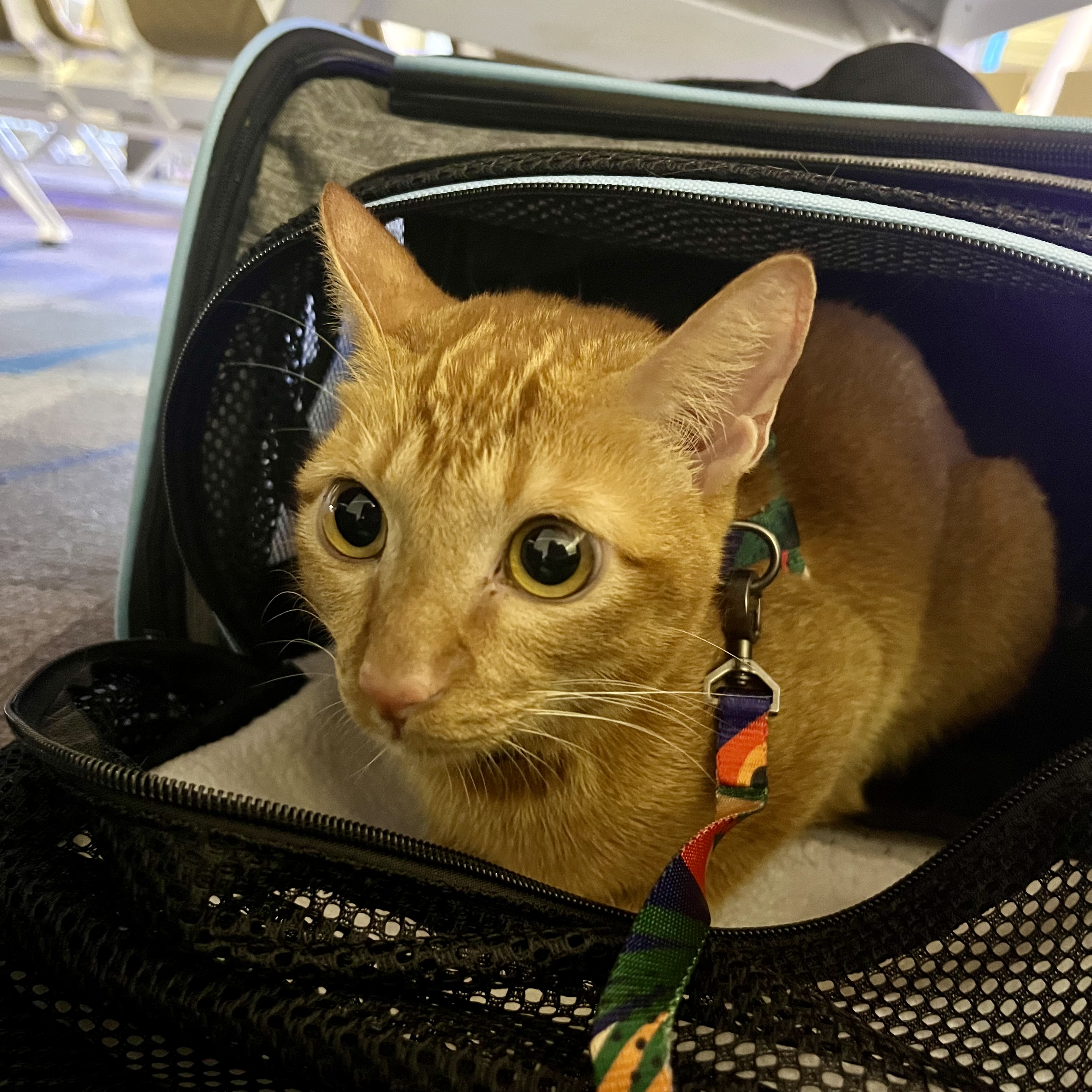
Flying with your cat for the first time is nothing short of nerve-wracking.
You worry about EVERYTHING – how they’ll handle being in their carrier for hours, whether they’ll meow the entire flight, and if something might go wrong at customs.
Traveling with pets is a whole different ballgame—full of uncertainty and unknowns. But with a little knowledge and preparation, you can set yourself and your kitty up for a more stress-free journey.
Having recently taken multiple flights with my three cats when moving from Thailand to the UK, I’m sharing the steps I took to ensure everything went as smoothly as possible.
Article content:
(Click any link to jump directly to the section)
- Ensure Plenty Of Preparation Time
- Buy An Expandable Pet Carrier
- Acclimatize Your Cat To Its Carrier/Crate
- Take Your Cat On Multiple Short Journeys
- Harness Train Your Cat
- Consider The Use Of Calming Aids
- Make Copies Of ALL Your Cat’s Documents
- Flying With Your Cat Checklist: What To Bring On The Plane
1. Ensure Plenty Of Preparation Time

Flying with your cat requires a LOT of planning and preparation. If you’re planning to take your kitty to another country, it is not as simple as just rocking up to the airport with them.
The specific documents you’ll need depend on the regulations of both your origin and destination countries. In many cases, preparing everything can take months, so it’s crucial to start researching well in advance.
For instance, when I brought my three rescue cats from Thailand to the UK, gathering all their essential documents took over four months! This included their pet passports, microchip certificates, rabies vaccinations, and rabies titer tests.
Beyond this, I had to get a health certificate from my vet 1 week before my flight. I also had to take the cats to the animal quarantine office at the airport to obtain an export license and certificates to enter the EU and the UK.
So, my first tip is to give yourself plenty of time to prepare for the trip.
Even if your cat already has a pet passport, allow yourself at least two weeks before your flight to handle the final stages of preparation. A little extra time can save you a lot of stress and ensure everything is in order for your journey.
2. Buy An Expandable Pet Carrier

One of the worst things about flying is the lack of personal space, and it’s no different for our furry friends!
When flying with a cat in the cabin, their carrier must fit under the seat in front of you. Unfortunately, this doesn’t leave much room for your kitty to move around.
However, I found a way around this – expandable carriers.
Some expandable carriers are designed to meet airline size restrictions when closed, but they can be expanded on one or two sides to give your cat more room. This feature can provide your kitty extra legroom during the flight and at the airport.
I used this expandable cat carrier, and it was a game-changer as there was enough space under the seat to keep one side expanded during the flight. This made for a more comfortable journey for my cats (although not so much for me!)
If your cat is traveling in the hold, there’s more flexibility with crate sizes. I recommend choosing a larger crate over the smallest option. That way, your kitty has more space to move around and feel comfortable during the flight.
3. Acclimatize Your Cat To Its Carrier/Crate

Most cats aren’t fans of being confined to small spaces like a carrier or crate. In fact, it can be incredibly stressful for them.
That’s why getting your cat comfortable with being in their travel carrier is essential.
The key to success here is:
- Taking things slowly and making the process gradual.
- Building a positive association with their carrier/crate.
Here’s how I helped my cats get comfortable being in their carriers:
- Keep the carrier in sight – Start by leaving the carrier in a visible and accessible spot for a few days. Keep the door open, and place something containing your cat’s scent, like a blanket, inside. You can also sprinkle catnip or add their favorite toy to make it more enticing.
- Use treats to build trust – Once your cat is familiar with the carrier, toss treats inside and let them go in to retrieve them at their own pace. This helps your cat associate the carrier with positive experiences rather than fear.
- Feed meals in their carrier – After a few days, begin feeding your cat’s meals inside the carrier with the door closed. Start with dry food, as it’s less messy if they’re hesitant at first. Let them out immediately after finishing their meal. This reinforces the idea that the carrier is a safe, non-threatening space.
- Gradually increase time spent in the carrier – As your cat becomes more comfortable, keep them inside the carrier for a short time after their meals. Begin with 5 minutes and gradually increase to 20 minutes or more. Your cat might protest initially, but over time, you’ll notice them settling down, grooming themselves, or even relaxing inside.
Once your cat can calmly stay in their carrier for an extended time, you can move on to tip number four…
4. Take Your Cat On Multiple Short Journeys
Most cats only experience car rides or public transport trips when they’re going to the vet. So, they don’t exactly associate traveling with positive experiences!
If you’re flying with your cat soon, it’s time to change that.
To do this, start taking your cat on short trips to build a positive connection with travel.
This could be taking them on short drives around the neighborhood. Or if you harness train your kitty (see next tip) you could take them out for walks in the park.
During these little outings, be sure to give your kitty lots of praise and treats both during and after the trip. Slowly but surely they will learn that something good comes from traveling.
In the lead-up to my flight, I had to take my cats to the vet and the airport vet. These trips broke their routine, helping them adjust to change and making the actual travel day less surprising and intimidating.
5. Harness Train Your Cat

I highly recommend harness training your cat—it’s a game-changer when it comes to traveling. It will allow your kitty to stretch their legs outside of their carrier at the airport and provide more control during key moments of your journey.
If you’re facing a long flight, your cat will be stuck in their carrier for many hours. Unfortunately, airline rules prevent you from letting your cat out during the flight. However, with harness training, you can give your cat a break by letting them stroll around while waiting to board or during a layover.
Here’s another important reason why harness training is essential for flying with your cat—getting through airport security.
When traveling with your cat in the cabin, you’ll need to take them out of their carrier and walk through the body scanner with them, while their carrier is sent through the bag scanner.
Airports are loud, chaotic environments, which can be frightening for cats. Having them in a harness with a lead gives you a firm grip, reducing the risk of them slipping from your arms and bolting—something that could be catastrophic.
If your cat is traveling in the hold, you’ll still need to remove them from their crate for scanning. However, once they’re safely back in their crate, I recommend removing the harness to avoid any potential discomfort or complications during the flight.
There are various styles of cat harnesses available. However, I find the ones with minimal straps, like the Piden Harness & Leash Set, are the most lightweight and, thus, most comfortable for cats.
6. Consider The Use Of Calming Aids

To keep your kitty relaxed during your travels, consider using a natural calming aid, such as:
- Pet Hemp Oil – Hemp oil for pets can reduce signs of travel stress, like restlessness and excessive meowing.
- Feliway Spray – Feliway releases pheromones that can create a sense of safety and security for your cat. Spray it inside and all around their carrier.
- NaturVet Quiet Moments – These calming treats contain melatonin (the hormone that regulates sleep-wake cycles) to help your kitty sleep while traveling and adjust to their new timezone—because yes, pets can get jet lag too!
Start giving your kitty these calming aids a few days before the trip, during the flight, and for the first few days after arriving at your destination.
For particularly anxious cats, you can also consult your vet about anxiety medication, like Gabapentin or Fluoxetine.
When I flew with my three cats from Thailand to the UK, I gave them all Fluoxetine, and it was a game-changer. It helped keep their stress levels in check and kept them calm and quiet during the flight.
Fluoxetine isn’t a sedative; it’s an antidepressant that works by boosting serotonin levels in the brain. If you think your cat might benefit from anxiety medication, consult with your vet.
7. Make Copies Of ALL Your Cat’s Documents
What shocked me when flying with my cats was the sheer amount of paperwork required and how often I had to present their documents throughout the journey.
So my final tip for flying with your cat is this: make copies of all your cat’s documents and keep them in your hold luggage. That way, if you lose any documents during your travels or run into issues at customs, you’ll have backups ready.
Additionally, if your cat is traveling in the hold, attach copies of their documents to the crate and keep the originals with you.
Flying With Your Cat Checklist: What To Bring On The Plane

Along with a mountain of documents, there are many Along with a mountain of documents, there are many things you’ll need to pack in your hand luggage when flying with cats.
If your kitty is flying in the cabin with you, ensure you have the following:
Pet Travel Checklist:
- Foldable travel litter tray
- A small amount of litter in a resealable bag
- Wet wipes
- Pee pads
- Harness and leash
- Collapsible pet food bowls
- Portable pet water dispenser
- Wet food sachets and a small amount of dry food
- Your kitty’s favorite treats
If your kitty is flying in the hold, you’ll need a water bottle and food/water dishes that attach securely to the crate door. Make sure the water bottle dispenses easily but doesn’t leak enough to soak the crate.
Also, pack pee pads and wet wipes so you can clean up any accidents in the crate upon arrival. Finally, don’t forget to include your cat’s bed or a favorite blanket in their crate to provide comfort and familiarity during the flight.
Final Thoughts On Flying With Your Cat
Flying with your cat for the first time may seem daunting, but proper preparation and planning can reduce the overwhelm.
To learn more about flying with pets, check out my article on Airline Rules For Safe Pet Travel.
And if you’re planning an international move with your kitty, download my FREE Guide To Bringing Your Pet From Thailand To The UK or EU. Along with a detailed walkthrough of the procedure, I share estimated costs and the best pet-friendly airlines.
Safe travels, and remember: a little planning goes a long way in making flying with your cat a more enjoyable experience!
Leave a Reply