
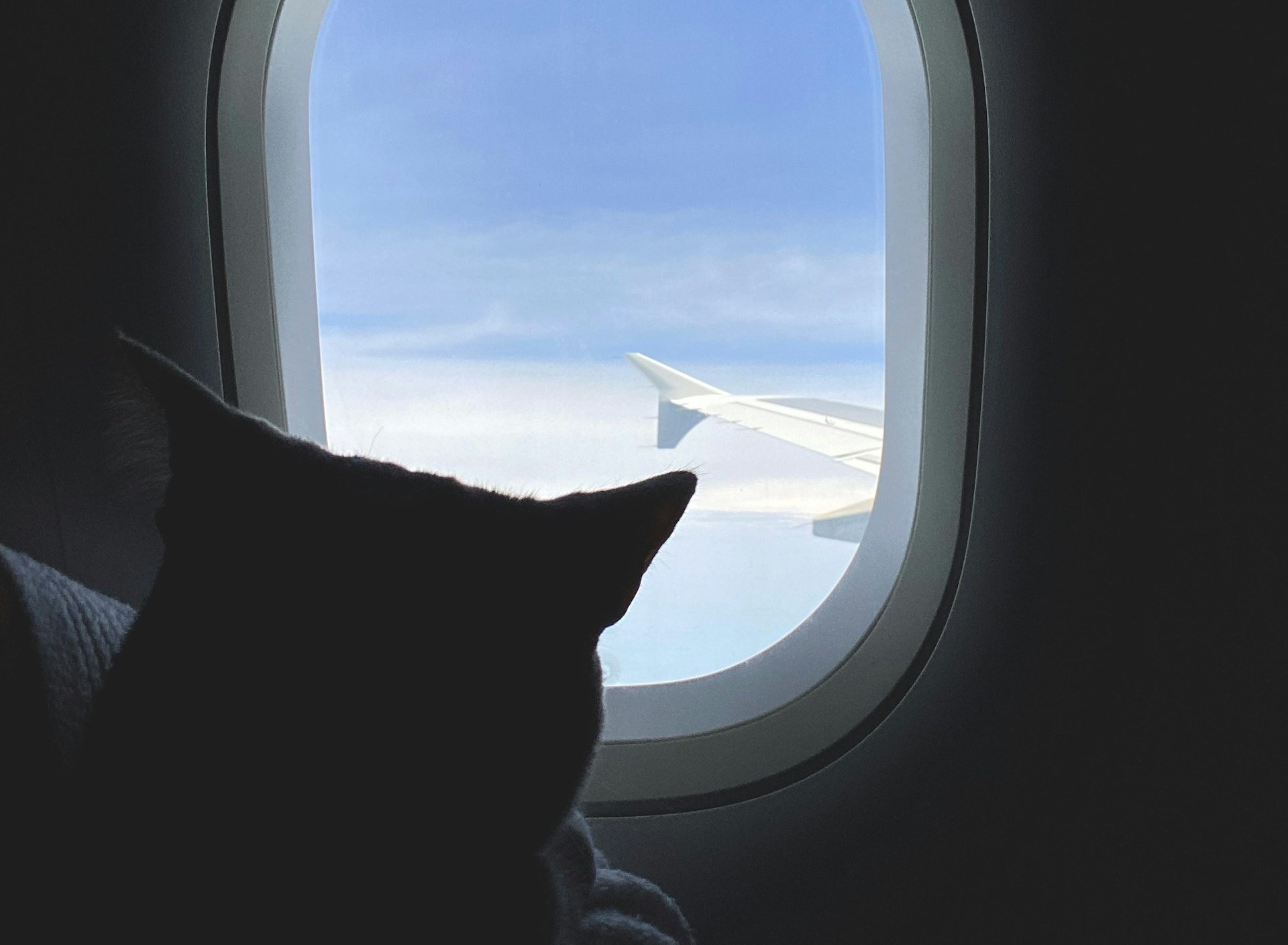
As expats, there will likely come a time when we have to say goodbye to Thailand, whether it’s by choice or due to visa constraints.
But what about that cat you’ve welcomed into your life, home, and heart during your stay here?
This cat has been by your side during your time in Thailand, and they deserve to continue sharing your life wherever it takes you next.
The good news is they can!
International pet travel from Thailand is totally possible, and with the proper steps, it’s more straightforward than you might think.
In this article, I’ll guide you through the process to ensure your furry friend can join you on your journey back home.
Article content:
(Click any link to jump directly to the section)
Can I Bring A Cat Home From Thailand?
Many expats automatically assume it’s impossible to bring their adopted Thai cat home. Others start to research the process and quickly decide that it is far too difficult or complex.
Well, I’m here to tell you that firstly, pet travel from Thailand is totally possible, and secondly, it’s not as complicated as it seems.
Like with anything in life, the more you understand the process, the less overwhelming and complex it becomes.
This is not to say that bringing a cat home from Thailand is simple or stress-free, far from it. BUT, if you work with a vet or pet relocation specialist, the process will be much smoother.
That being said, it is something that you must do well ahead of leaving the country. The process differs from country to country, but it can take up to 6 months.
So, even if you have no plans to leave Thailand right now, getting your pets ‘travel ready’ is still wise.
How To Take A Cat Home From Thailand
The pet travel from Thailand process will depend on your destination country. However, you will typically need to prepare the following documents before traveling with your cat:
Pet passport

If you’ve vaccinated your kitty here, your vet would have given you a vaccination booklet. However, to export your cat from Thailand, you’ll need an official Thailand ‘pet passport’ showing your kitty’s vaccinations.
Only a licensed veterinarian well-rehearsed in the pet export process can provide you with a Thailand pet passport.
Microchip

Pet microchips are not a legal requirement in Thailand like they are in some countries, such as the UK. However, when it comes to taking a cat or dog out of Thailand, they are.
When you arrive at your destination, an official will scan your pet to ensure their microchip number matches their documents.
Therefore, you will need to get your cat microchipped and have an official microchip certificate.
Rabies vaccine

Cats and dogs coming from Thailand must have a rabies vaccine to enter most countries. This is because Thailand is not yet classed as a Rabies-free country.
This vaccine (unless it’s a booster) must be administered more than 30 days but less than a year prior to travel.
Other core vaccines up to date

Some countries also require your pet to be up-to-date for all core vaccines in Thailand.
For cats, there are only two core vaccines in Thailand – The rabies vaccine and the combined vaccine.
Side note: If the country you’re traveling to doesn’t officially require the combined vaccine, I still recommend getting it to ensure a smooth export process.
The vet who helps prepare your cat for travel will add your cat’s core vaccine details to their pet passport.
Rabies titer test

Some countries, such as most European countries and the UK, require a Rabies titer test. This makes the preparation process significantly longer and more expensive (see below).
As Thailand is not a rabies-free country, some countries require proof that your pet is sufficiently immune to rabies – the titer test provides this.
Countries that DO require the rabies titer test are:
- UK
- All EU countries
- Australia (Note that cats cannot travel directly from Thailand to Australia and must spend 180 days in an approved country beforehand)
- New Zealand (Same rules as Australia apply)
- Singapore
- China
- Hong Kong
- Japan
A valid rabies titer test will eliminate the need for quarantine or, in some countries, reduce the quarantine time.
Pet Travel From Thailand To The EU or UK

Step 1: Get your cat microchipped using a licensed vet and official microchip company.
Step 2: Get your cat’s first rabies vaccine one day after the microchip. Your vet will add the vaccine sticker and details to an official Thailand pet passport.
Step 3: Wait 30 days, then get your cat’s second rabies vaccine.
Step 4: Wait 30 more days, then do the rabies titer blood test.
Step 5: Wait 3 months! You should receive the result of the titer test back within about one month. Once you know your cat has passed the titer test, you can book your flights. However, the flight date cannot be any less than 3 months from the date the blood was drawn.
Step 6: Once your pet’s flight reservation is confirmed, bring your cat to the airport AQS a few days before the flight for a medical check. After checking your cat, the vet will issue an EU or GB health certificate.
For an in-depth walkthrough of this process, download my FREE Guide To Bringing Pets From Thailand To The EU or UK!
How Much Does It Cost To Bring A Cat Home From Thailand?
The cost of the pet travel from Thailand varies depending on the veterinarian you work with. My advice is to do some research on the most reputable vets in your area offering this service and call around to compare prices.
However, I also want to point out that the cheapest option may not be the best for such a complex process as pet travel.
What’s most important is that you work with a licensed, reputable vet with ample experience in pet travel from Thailand to your destination country.
However, to give you an idea of the costs, here’s what I paid for my cats’ travel documents to the EU or UK:
- Microchip, pet passport, & vaccines = 2,500 baht
- Rabies Titer Test (Using Thai Lab) = 10,000 baht
- Rabies Titer Test (Using UK Lab) = 15,000 baht
- Health certificate & export license = 260 baht
Final Thoughts On Pet Travel From Thailand
If you’re preparing to leave Thailand, remember that your cat is more than just a pet—they’re a part of your family.
While the journey may be stressful for them, it’s nothing compared to the anxiety and hardship they would face if left behind.
Abandoned cats often struggle to survive, facing dangers they’re simply not equipped to handle.
So, by taking the necessary steps to bring your cat home with you, you’re not just making a responsible choice—you’re making a compassionate one.
If you’re moving to the UK or EU, download my FREE guide to pet relocation from Thailand.
Leave a Reply