
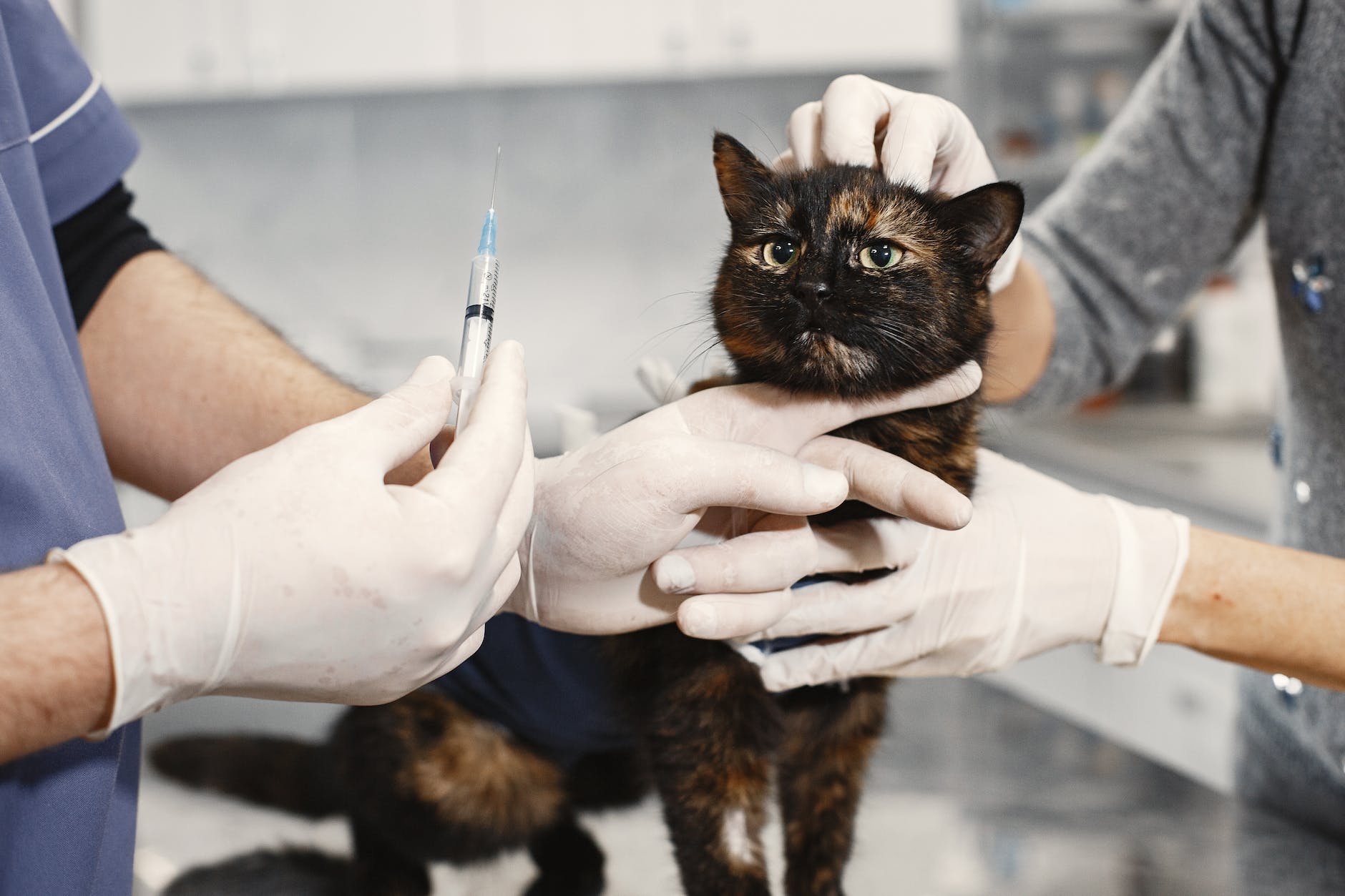
It’s a heartwarming moment when you adopt a stray cat in Thailand (or, in most cases, when THEY adopt you!)
But after the initial cuddles and selfies, you’ll likely start thinking about the logistics of keeping your new furry friend healthy.
One of the first things you should do when you adopt or rescue a Thai cat is vaccinate them.
There are two core cat vaccines in Thailand, which I firmly believe EVERY cat here should have.
In this article, I explain why cat vaccines in Thailand are essential and the vaccination schedule you should follow.
Let’s dive in!
Article content:
(Click any link to jump directly to the section)
Why Cat Vaccination Is Important In Thailand
Several deadly feline viruses are rife in Thailand. As someone who rescues stray kittens, I’ve had my fair share of experience with many of them.
So, believe me when I say, you do NOT want your cat or kitten to contract cat flu, Panleukopenia (parvo), or rabies, to name a few.
Thankfully, the chance of a cat contracting these diseases is significantly reduced through vaccination.
Of course, like with any vaccine, it will not offer 100% protection, but it will do the following:
- Significantly reduce the chance of them catching the disease
- Increase their likelihood of survival should they contract it
To further explain the importance of Thailand cat vaccines, let’s briefly discuss these deadly diseases.
Cat flu
Cat flu is a virus that presents itself similarly to the human flu virus. It hinders the upper respiratory infection, causing a range of respiratory issues.
Cat flu symptoms:
- A runny nose
- Sneezing
- Coughing
- Eye discharge
- Mouth ulcers
- Fever
While most healthy adult cats can fight off cat flu, kittens are highly vulnerable to the virus.
I’ve rescued several stray kittens with severe cat flu. When left untreated for some time, the symptoms above will escalate, causing difficulty breathing and painful eye infections.
If left untreated further, it will most likely become fatal.
Cat flu is caused by one of two viruses: Feline Herpesvirus (FHV), also known as feline viral rhinotracheitis (FVR), or Feline Calicivirus (FCV).

Panleukopenia (parvo)
Feline Panleukopenia (FPV), commonly known as parvo, is a serious and deadly virus for cats and kittens.
There are some very worrying stats around Feline Panleukopenia.
For example, a 2009 article published in the Journal of Feline Medicine and Surgery states that the mortality rate in kittens is over 90%!
Meanwhile, the MSD Vet Manual reports a 20%–51% survival rate for cats that received in-hospital supportive treatment.
From my experience and conversations with my vets, I believe there are different strains of parvo, and the severity of the virus can differ between cats.
Moreover, I’ve seen that the earlier you treat Panleukopenia, the higher the chance of defeating it. But this is a conversation for another day!
Regardless of what the actual statistics are, we can safely say that Panleukopenia is one of the deadliest diseases a cat can contract. And did I mention the virus is prevalent across Thailand?
Rabies
Cat rabies in Thailand has decreased significantly since the 1980 rabies outbreak, but it remains a threat to all.
Vaccinating your cats and dogs is essential to keep rabies on the decline.
Your cat can contract rabies from a stray cat (or even a dog), and as it’s a zoonotic disease, you can then catch it should your cat bite you.
What Cat Vaccines Are Necessary In Thailand?

Most vets in Thailand recommend the following two core vaccines for cats and kittens.
1. Combined Vaccine
Efficacy: Unknown but estimated between 50 – 85 %
Price: 300 – 800 baht
Schedule: First shot from 8 weeks of age, second shot four weeks after the first, then a booster shot every 12 months
The combined/combination vaccine in Thailand protects cats against three common viruses.
These are feline Panleukopenia and the two viruses that cause cat flu: Calicivirus and feline Herpesvirus (Rhinotracheitis).
Kittens and cats need two shots four weeks apart to receive complete protection. They will then need one booster shot every year.
Typically, kittens can receive their first combined vaccine shot at 8 weeks old, though some vets and rescues will administer it at 6 weeks old.
To prevent a reduction in the efficacy rate, they must receive the second dose four weeks after the first.
If you forget and more than four weeks have passed, the vet will likely suggest you do an additional shot.
So, how effective is this vaccine?
It’s hard to find exact statistics, but one study found an 83.3% effectiveness rate against the Panleukopenia virus (FPV).
Meanwhile, a small 2009 study found an effectiveness rate of 53% for FHV (Herpesvirus) and 63% for FCV (Calicivirus).
I’ve personally had two fully vaccinated cats get cat flu (with mild symptoms) so this is definitely not a vaccine that will fully protect your cat from these viruses.
Do All Cats Need The Combined Vaccine?
You might wonder, does my cat need this vaccine if they are indoor-only?
The answer is yes, and here’s why…
These viruses are everywhere in the environment in Thailand.
So even if your cat doesn’t go outside, they could still catch parvo or cat flu by the virus entering your house. This could be via your shoes, hands, clothing, etc.
Plus, Panleukopenia can live on surfaces for years. So, if you move to a new house, there is always a risk that the virus is present there.
2. Rabies Vaccine
Efficacy: Very high, around 95%
Price: 50 – 100 baht (sometimes free for strays)
Schedule: One single dose from 12-16 weeks of age, then a booster shot every 12 months
Rabies is almost always fatal, and there is currently no cure for the disease.
Thankfully, though, the rabies vaccine has a very high protection rate. So, I cannot stress the importance of getting your cat this vaccine and any stray cats you feed or take care of.
The rabies vaccine is also very cheap – my vet charges just 50 baht per cat. Many animal rescue organizations will also administer this vaccination for free for unowned cats.
Unlike the combined vaccines, cats and kittens require just one shot to receive complete protection. Protection lasts one year, so they should receive a booster every 12 months.
Other Cat Vaccines In Thailand To Consider

There are a couple of other Thailand cat vaccines you might want to consider, especially if your cat goes outside. As they are not core cat vaccines in Thailand, you’ll need to ask your vet about them.
Feline Leukemia (FeLV)
Feline Leukemia is an incurable virus that often leads to other severe medical issues, such as cancer.
Cats mainly contract Feline Leukemia if bitten by a cat carrying the virus. However, as the virus sheds in saliva, nasal secretions, urine, and feces, it can also spread by sharing litter boxes or feeding dishes with an infected cat.
If you have only one indoor cat, there is no need to get this vaccine.
However, if your cat goes outside, it is worth considering, as the Leukemia vaccine protection rate is pretty high – 80% to 93%. If your cat is prone to getting into fights, I particularly recommend it.
Feline Immunodeficiency Virus (FIV)
Feline Immunodeficiency Virus (FIV) is another incurable virus, primarily transmitted through bite wounds caused by infected cats.
There is a vaccine against FIV, but it is less popular than the others for several reasons.
Firstly, the FIV vaccine protective rate is low, around 56%.
Secondly, it has been found that cats vaccinated against FIV test false positive.
Like Feline Leukemia, indoor cats have a low risk of contracting FIV.
Final Thoughts On Thailand Cat Vaccines
While there is a lot of controversy around vaccines in general, my experience of rescuing cats has taught me one thing.
Viruses are widespread in stray cat communities here. Since the mortality rates of many viruses are high, vaccinating your cats in Thailand is a no-brainer.
Plus, vet visits for things like vaccinations are generally low-cost. Get the low down on Vet Prices in Thailand here.
Leave a Reply