
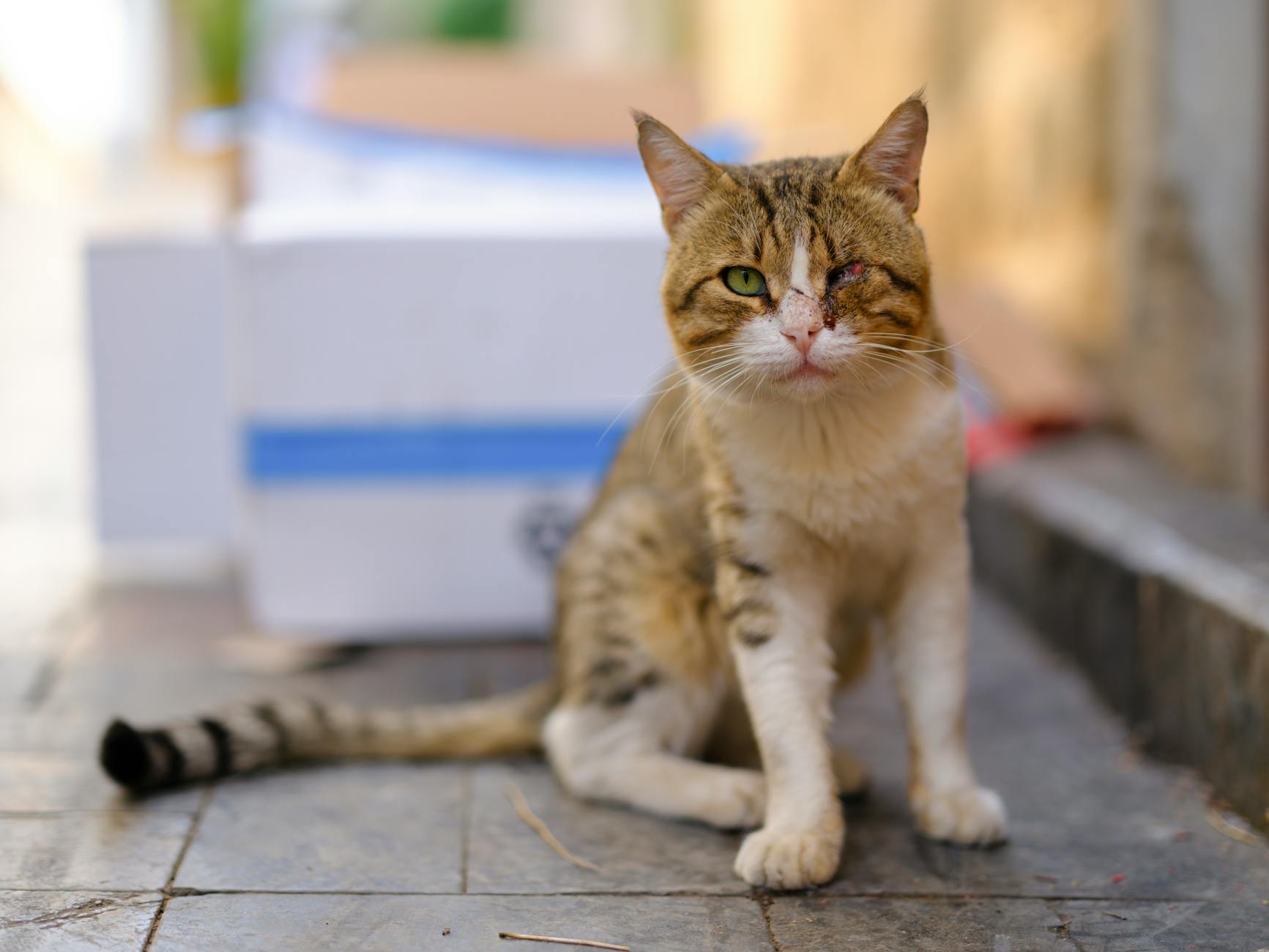
Bacteria, fungi, and parasites are all rife in Thailand, so it’s no surprise that these are the most common cat infections here.
While they can occur in cats in other countries, I’ve noticed that these infections are more prevalent in Thailand. For example, the UK’s cold climate means there are naturally far fewer fungi and bacteria.
So, whether you’ve adopted a Thai cat or have brought your kitty over from your home country, you should be extra cautious.
I’ve found that the longer a cat has an infection, the longer it takes to treat it (and the more severe the symptoms will be).
So, knowing how to spot the first signs of these common cat infections will allow you to seek prompt veterinary care and treatment before the infection becomes severe.
Let’s explore the 5 most common cat infections in Thailand, including how to spot and treat them.
Article content:
(Click any link to jump directly to the section)
1. Worms (Parasite Infections)
Worms, a type of intestinal parasite, are one of the most common cat infections I deal with in Thai cats and kittens.
There are many types of worms, but the most common is roundworms. These long, white worms are about 2-5 inches long and look like spaghetti (see below) and so are easy to spot in your cat’s poop.
Tapeworms are also common among cats in Thailand. These worms are flat and look like ribbons. But unlike roundworms, they are eliminated as segments that look like grains of rice, so they can be more challenging to spot.
There are also some less common intestinal parasites that Thai cats can get, which I discuss in this article on Thailand Cat Parasites.

How Do Cats Get Worms?
Cats can contract worms in various ways, such as:
- Eating prey that are carriers of worm larvae or eggs
- Ingesting fleas that harbor worm larvae
- Coming into contact with infected particles in soil or feces
- Ingesting worm eggs or larvae present in contaminated food or water
- Acquiring worms from their mother during nursing or while in the womb
While worms are most common in outdoor cats, indoor cats in Thailand are still at risk.
This is because in Thailand, many prey, such as geckos and insects, enter the house and may carry worm eggs. So, if your indoor cat ingests them, it can contract worms.
Signs Of Worms In Cats
Most cat parents uncover a worm infestation in their cat by spotting them in their feces while cleaning the litter tray.
Other common cat worms symptoms include:
- Diarrhea (sometimes with the presence of blood or mucus)
- A hard, bloated belly
- Increased appetite
- Constipation (a severe worm infestation can block the colon)
- Inability to gain weight in kittens
- Lethargy
- Vomiting (in severe cases)
How To Treat Worms In Cats

If you’re wondering how to get rid of cat worms, you’ll be pleased to hear that it’s pretty simple.
The most common worm treatment is an oral medication called Drontal, suitable for kittens six weeks and older.
Usually, one dose of Drontal is enough to kill worms, and it covers all the main types: tapeworms, hookworms, and roundworms.
However, if your cat has a less common internal parasite like coccidia, they will require antibiotics.
2. Ringworm (Fungal Infections)

Ringworm (Dermatophytosis) is a common fungal skin infection in cats.
While not life-threatening, it is essential to spot it and begin treatment ASAP, as ringworm is very contagious, both to humans and other animals.
How Do Cats Get Ringworm?
Cats catch ringworm from an environment where the fungal spores are present. While this is most commonly outdoors, you can unknowingly bring fungus indoors via shoes or clothing.
Although fungus is prevalent in Thailand, the likelihood of a cat getting a fungal infection depends on their immune system.
Young kittens and stray cats in poor health are most at risk, while healthy cats are less likely to contract ringworm.
Moreover, as ringworm is zoonotic and contagious, your cat can catch fungus from an infected cat or human.
Signs Of Ringworm In Cats
So, what does a cat ringworm look like?
Typically, it looks like a round red rash (similar to a cigarette burn) with hair loss in that area. The rash might be scaling or crusting.
Ringworm is incredibly itchy, so your cat will likely scratch, groom, or bite that area often. Because of this, it might appear inflamed and cause a secondary bacterial infection.
There might be one patch only or several all over the body. So, if you notice one patch, check for others.
Cat Ringworm Treatment

If you’re wondering, ‘Will cat ringworm go away by itself?‘ it depends.
Most kittens and cats with low immune systems cannot fight off the infection on their own.
In healthy adult cats, it MAY resolve itself, but it will take several months. However, as there is a high chance you or others in the home will catch it during this time, it is always best to treat it with medical care.
So, how do you treat cat fungus at home?
There are two options, oral and topical medication, but in my experience, the fastest results are obtained by combining the two treatments.
For topical treatment, you can use a cat fungal infection cream or a spray, such as Funginox.
You apply these treatments directly to the lesions a few times a day. Funginox is available in select pharmacies and pet shops.
If the fungal infection is severe, your veterinarian will probably recommend bathing your kitty with a special medicated shampoo once or twice a week.
Your vet might also recommend oral antifungal medication for severe cases, such as Itraconazole or Ketoconazole. However, these medications are not suitable for kittens.
3. Eye Infections

Some minor discharge from your cat’s eyes is normal, but excessive discharge, accompanied by other signs like squinting, can signal an infection.
While they can start as a minor thing, most eye infections in cats will not go away on their own. And if left untreated, they can become severe, requiring surgery or even resulting in blindness.
Moreover, many cat eye infections are contagious and can spread to other cats quickly.
How Do Cats Get Eye Infections?
So, what causes eye infections in cats?
There are various possibilities, such as:
- An underlying upper respiratory infection, such as cat flu
- Bacteria from debris or dirt getting in the eye
- Accidentally scratching or damaging the cornea by playing
- Allergies that cause conjunctivitis
Signs Of Eye Infection In Cats

If you notice any of the following symptoms in your cat and they persist longer than 24 hours, it is a good idea to take your kitty to your vet for a check-up:
- Redness or swelling around the eyes
- Clouded pupils
- Excessive discharge (this can be clear, white, or green in color)
- Excessive squinting or a sensitivity to light
- Frequent rubbing and scratching at their eyes
- Visible third eyelid (in the inner corner of their eye)
Cat Eye Infection Treatment
The most common way to treat eye infections in cats is via eye drops, but the type you need will depend on the cause.
For example, if bacteria are causing the infection, your vet will likely prescribe antibiotic ointments (and potentially oral antibiotics).
Or, if your cat has conjunctivitis due to allergies, your vet may prescribe a steroid ointment instead.
Also, note that the number of times your cat needs drops per day will depend on the severity of the infection.
4. GI Infections

Gastroenteritis refers to inflammation in the stomach or intestines caused by an infection. This typically manifests as diarrhea or vomiting (or both) and causes abdominal pain.
What Causes GI Infection In Cats?
Most GI infections in cats are caused by bacteria entering the digestive tract, but many viral and parasitic infections can also cause GI issues.
Bacterial GI infections occur from ingesting food, water, or prey harboring bacteria.
Symptoms Of GI Infections In Cats
Cats dealing with a GI infection will seem unlike their usual selves. They will likely play less, sleep more, and may be withdrawn and even hide.
In addition, their poop will be more frequent, runny, and smelly, and they might vomit foamy, yellowish bile.
- Diarrhea
- Vomiting
- Abdominal pain
- Fever
- Lethargy
Treatment Of GI Infections In Cats
The treatment of GI infections in cats depends on the cause. First, I recommend you take your cat to the vet, who can check the stool or blood for bacteria.
If the vet determines the GI infection is due to bacteria, antibiotics will likely clear it up.
If your cat vomits often, the vet may prescribe anti-vomiting medications. Likewise, if they have severe diarrhea, the vet may give medication to control this.
When dealing with GI issues, feeding your cat a bland diet, such as boiled chicken, can also help. I also recommend giving them probiotics to help boost their gut health.
5. Abscesses (Skin Bacterial Infections)

An abscess is an accumulation of pus caused by bacteria that enters the skin through an open wound.
If you don’t notice and clean a wound on your cat promptly, it can trap bacteria under the skin and become a painful abscess.
How Does A Cat Get A Bacterial Skin Infection?
Bacterial infections on a cat’s skin often occur due to a fight wound, as a cat’s teeth and claws carry bacteria.
So, if your cat goes outside and fights with other cats, abscesses are one of the most common cat infections it is at risk of.
Cats can also get wounds from:
- Playing
- Being bitten by other animals like snakes or dogs
- Accidental injuries that get infected
Cat Abscess Signs
Bacteria can enter a cat’s body through a small cut or bite. The wound quickly heals, trapping the bacteria.
After a few days, an abscess may form under the skin, appearing as a red, swollen area (see below).
Abscesses are incredibly painful, so most cats lick the area to soothe the pain. This results in hair loss, making the abscess visible at this point.

Other signs you might notice are:
- Pus or blood leaking from the wound
- Excessive licking and grooming
- Limping (if the abscess is on a limb)
- Fever
- Low energy/lethargy
Cat Abscess Treatment
So, how do you treat a skin infection in a cat caused by bacteria? All abscesses will require a course of antibiotics, such as Amoxicillin.
Cats often open the abscess by licking the area. If this happens, keep the wound covered with a bandage or cat top (see above) while it drains to prevent your cat from licking it.
If the abscess has not yet burst, a veterinarian will likely need to lance and drain it—don’t try this yourself!
Along with antibiotics, some home remedies for cat bacterial skin infections can help to clear the infection and promote healing. One of these is to flush the wound with saline and spray it with nanospray daily.
Nano spray contains silver nanoparticles, which have been found to have antibacterial, antifungal, and antiviral properties.
Final Thoughts On Common Cat Infections In Thailand
Note that this guide details just a handful of common cat infections in Thailand and is not a complete list of illnesses.
Along with bacteria, fungi, and internal parasites, you should protect your cat from fleas, mites, and lice. To learn how to treat external parasites in cats, check out this article!
Plus, check out this guide to learn about common cat viruses in Thailand, including cat flu, FIV, and feline Leukemia.
Leave a Reply